

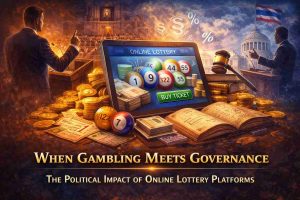
In today’s digital landscape, เว็บแทงหวยออนไลน์ has become more than a form of entertainment. It represents a growing political and regulatory challenge for governments worldwide. As online gambling platforms expand rapidly, they force policymakers to confront difficult questions about legality, public welfare, taxation, and control. What appears to be a simple game of chance is increasingly shaped by political decisions and ideological divides.
The Rise of Online Gambling in a Political Context
Online lottery platforms have grown because of accessibility, anonymity, and convenience. These advantages appeal to users, but they also complicate governance. Unlike traditional state-run lotteries, online platforms often operate across borders, making regulation difficult.
Governments must decide whether to ban, regulate, or legalize these platforms. Each option reflects a political stance. Restriction prioritizes moral and social protection. Regulation emphasizes control and harm reduction. Legalization often focuses on economic opportunity and taxation. The chosen path reveals how political systems balance freedom with responsibility.
State Revenue Versus Social Responsibility
One of the strongest political arguments surrounding online gambling is revenue. Legalized gambling can generate significant income through taxes and licensing fees. For governments facing budget pressure, this is a powerful incentive.
However, critics argue that reliance on gambling revenue creates ethical conflict. When the state benefits financially, it may be less motivated to address addiction and financial harm. This tension places policymakers in a difficult position. They must justify whether economic gains outweigh potential social costs. The debate is not just economic, but deeply political.
Regulation as a Tool of Power
Regulation is more than a legal framework. It is a demonstration of political authority. Licensing requirements, advertising rules, and player protection laws all reflect how much control governments want over digital behavior.
Strict regulation often aligns with political platforms focused on public health and social order. Looser regulation may reflect market-driven or libertarian ideologies. In both cases, online lottery platforms become a testing ground for political values in the digital age.
Public Opinion and Political Pressure
Voters play a major role in shaping gambling policy. Public concern about addiction, fraud, and youth access often pushes politicians toward stricter laws. At the same time, public demand for personal choice and modern digital services creates pressure in the opposite direction.
This divide forces political leaders to navigate conflicting expectations. Decisions about online gambling can influence elections, party alignment, and public trust. As a result, gambling policy is rarely neutral. It is shaped by ideology, media narratives, and voter sentiment.
Cross Border Platforms and Political Limits
Online lottery platforms often operate beyond national boundaries. This challenges traditional political power structures. Governments may struggle to enforce laws on platforms hosted overseas, exposing the limits of state authority in a global digital economy.
This has led to international cooperation efforts, censorship debates, and stricter internet controls in some regions. These responses raise broader political questions about sovereignty, digital freedom, and state surveillance.
Why Online Gambling Is a Political Issue
Online gambling is no longer just about luck. It reflects how governments manage risk, morality, and money in a connected world. Decisions about platforms like เว็บแทงหวยออนไลน์ reveal how political systems adapt to technology and shifting public behavior.
At its core, the debate is about who controls access, who benefits financially, and who bears responsibility. As online gambling continues to grow, it will remain a powerful lens through which to examine politics, governance, and the future of regulation.